The technology landscape in the United States is continuously evolving, with companies consistently pushing the boundaries of innovation across various sectors. From advancements in artificial intelligence and consumer electronics to breakthroughs in sustainable technology and digital services, the pace of development is rapid. This surge in new products and services aims to enhance user experiences, improve efficiency, and address emerging societal needs. Staying informed about these developments is crucial for consumers, businesses, and industry professionals alike to leverage new opportunities and adapt to changing market dynamics. This overview highlights some of the key areas and notable launches shaping the future of technology.
AI and Machine Learning Advancements
Artificial Intelligence (AI) and Machine Learning (ML) continue to be at the forefront of technological progress in the US. Companies are investing heavily in developing more sophisticated AI models capable of complex problem-solving, pattern recognition, and predictive analysis. In the consumer space, AI is being integrated into smart home devices, personal assistants, and recommendation engines, making them more intuitive and personalized. For businesses, AI and ML are revolutionizing operations through enhanced data analytics, automation of repetitive tasks, and improved customer service via chatbots and virtual agents. The development of generative AI models has also opened up new possibilities in content creation, software development, and scientific research, promising significant productivity gains and creative avenues. Ethical considerations and the responsible deployment of AI remain a critical focus, with ongoing discussions and development of guidelines to ensure fairness and transparency.
Deep Learning in Healthcare
The healthcare sector is experiencing a significant transformation driven by deep learning, a subset of ML. AI algorithms are now being used to analyze medical images with remarkable accuracy, aiding in the early detection of diseases like cancer and diabetic retinopathy. These systems can process vast amounts of patient data to identify risk factors, predict disease progression, and personalize treatment plans. Furthermore, AI is accelerating drug discovery and development by simulating molecular interactions and identifying potential therapeutic candidates, drastically reducing the time and cost associated with traditional research methods. Wearable devices equipped with AI can monitor vital signs continuously, providing real-time health insights and enabling proactive interventions. The integration of AI in healthcare is not only improving diagnostic capabilities but also streamlining administrative tasks, allowing medical professionals to dedicate more time to patient care.
Next-Generation Consumer Electronics
The consumer electronics market in the US is characterized by a relentless cycle of upgrades and new product introductions, focusing on enhanced performance, connectivity, and user experience. The latest smartphones boast more powerful processors, advanced camera systems with AI enhancements, and improved battery life, catering to a demand for seamless mobile computing. The development of foldable displays is also gaining traction, offering larger screen real estate in compact form factors. In the realm of home entertainment, 8K televisions are becoming more accessible, delivering unparalleled visual clarity and detail, often paired with sophisticated sound systems that create immersive audio experiences. Smart home devices continue to expand their capabilities, with new integrations allowing for more cohesive and automated living environments. The focus on interoperability and the development of robust ecosystems are key trends, ensuring that devices work together seamlessly to simplify daily life.
Wearable Technology Evolution
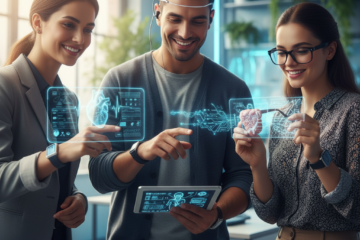
Wearable technology has moved beyond simple fitness tracking to become sophisticated personal health and communication hubs. The latest smartwatches offer advanced health monitoring features, including ECG capabilities, blood oxygen level tracking, and sophisticated sleep analysis, providing users with comprehensive insights into their well-being. Fall detection and emergency SOS features enhance user safety, particularly for older adults. Integration with smartphone ecosystems allows for effortless notification management, contactless payments, and even voice-controlled interactions. Beyond watches, advancements are seen in smart rings and augmented reality (AR) glasses, each exploring new ways to integrate technology into everyday activities without being intrusive. The continuous miniaturization of components and improvements in battery efficiency are crucial enablers for these innovations.
Sustainable Technology and Green Innovations
Environmental consciousness is increasingly influencing technological development in the US, leading to a surge in sustainable innovations. Companies are prioritizing the development of energy-efficient products and solutions to reduce their carbon footprint. In the computing sector, this translates to more power-efficient processors, solid-state drives that consume less energy, and the use of recycled materials in device manufacturing. The renewable energy sector is also seeing rapid technological advancements, with improvements in solar panel efficiency, battery storage solutions, and smart grid technologies that optimize energy distribution. Electric vehicles (EVs) are becoming a mainstream option, supported by expanding charging infrastructure and advancements in battery technology that increase range and reduce charging times. Software solutions that help businesses and individuals monitor and reduce their environmental impact are also gaining prominence, leveraging data analytics and AI to identify areas for efficiency improvements.
Circular Economy Initiatives
A significant trend in sustainable technology is the adoption of circular economy principles. Manufacturers are increasingly designing products for longevity, repairability, and recyclability. This includes developing modular designs that allow for easy component replacement, reducing the need to discard entire devices. Take-back programs and refurbishment initiatives are also gaining momentum, giving pre-owned electronics a new life and diverting waste from landfills. The focus is shifting from a linear “take-make-dispose” model to one that emphasizes resource efficiency and waste reduction. This approach not only benefits the environment but also offers economic advantages by reducing reliance on virgin materials and creating new business opportunities in repair and recycling services.
The relentless pace of technological advancement in the United States presents both exciting opportunities and significant challenges. As AI becomes more integrated into daily life and sustainable practices gain prominence, the focus is on harnessing these innovations responsibly to create a more efficient, connected, and environmentally conscious future for all citizens.
Emerging Trends in Connectivity
The evolution of connectivity is a cornerstone of modern technological progress, enabling new applications and services. The rollout of 5G networks across the US continues to expand, offering higher speeds, lower latency, and increased capacity, which are critical for the growth of the Internet of Things (IoT), autonomous vehicles, and advanced mobile applications. Beyond 5G, research and development into future wireless technologies, such as 6G, are already underway, promising even more transformative capabilities. Satellite internet services are also expanding their reach, providing broadband access to remote and underserved areas, thereby bridging the digital divide. The proliferation of connected devices, from industrial sensors to personal health monitors, underscores the growing importance of robust and reliable communication infrastructure.
You will be redirected to the official site.
The Internet of Things (IoT) Expansion
The Internet of Things (IoT) continues its pervasive growth, connecting a vast array of devices to the internet and enabling data exchange and remote control. In the consumer market, smart home devices for lighting, security, and climate control are becoming more sophisticated and interconnected. Industrially, IoT sensors are revolutionizing manufacturing, logistics, and agriculture by providing real-time data for process optimization, predictive maintenance, and resource management. The healthcare industry benefits from IoT through remote patient monitoring systems and smart medical devices. Security and privacy remain paramount concerns as the number of connected devices escalates, driving innovation in secure network protocols and data encryption methods. The development of AI-powered analytics platforms is crucial for making sense of the massive datasets generated by IoT ecosystems.
Advancements in Software and Cloud Computing
The software industry in the US is a driving force behind digital transformation, with continuous innovation in application development, cloud services, and data management. Cloud computing platforms, such as those offered by Amazon Web Services (AWS), Microsoft Azure, and Google Cloud, continue to evolve, providing scalable, flexible, and cost-effective infrastructure for businesses of all sizes. These platforms enable rapid deployment of applications, advanced data analytics, and AI/ML services, empowering organizations to innovate faster and operate more efficiently. The rise of containerization technologies like Docker and orchestration tools like Kubernetes has streamlined application deployment and management. Furthermore, the focus on cybersecurity is more intense than ever, with new software solutions and best practices emerging to protect data and systems from increasingly sophisticated threats.
Cybersecurity Innovations
In an era of heightened digital threats, cybersecurity innovation is critical. Companies are developing advanced threat detection and response systems leveraging AI and machine learning to identify and neutralize cyberattacks in real-time. Zero-trust security models, which assume no user or device can be trusted by default, are becoming a standard approach. End-to-end encryption for communications and data storage is essential, with ongoing efforts to enhance its robustness. Biometric authentication methods, including facial recognition and fingerprint scanning, are becoming more common for secure access to devices and services. The development of quantum-resistant cryptography is also a key area of research, preparing for the potential security challenges posed by future quantum computers. Public-private partnerships are crucial for sharing threat intelligence and developing coordinated responses to cyber incidents.
Frequently Asked Questions
What are the key areas of technological innovation in the US?
The primary areas of technological innovation in the US include Artificial Intelligence (AI) and Machine Learning (ML), next-generation consumer electronics, sustainable technology and green innovations, advanced connectivity solutions like 5G and IoT, and robust software and cloud computing platforms, with a strong emphasis on cybersecurity.
How is AI impacting the healthcare industry?
AI is revolutionizing healthcare through improved diagnostics with image analysis, accelerated drug discovery, personalized treatment plans based on patient data, and enhanced patient monitoring via wearables. It also helps in streamlining administrative tasks, allowing medical staff to focus more on patient care.
What does “sustainable technology” encompass?
Sustainable technology refers to innovations that minimize environmental impact. This includes energy-efficient products, renewable energy solutions, electric vehicles, and the implementation of circular economy principles in manufacturing, focusing on product longevity, repairability, and recyclability.
What are the benefits of 5G technology?
5G technology offers significantly higher speeds, lower latency, and greater capacity compared to previous generations. These improvements are crucial for enabling advanced applications such as the Internet of Things (IoT), enhanced mobile broadband, real-time communication for autonomous systems, and immersive entertainment experiences.
Why is cybersecurity so important in the current tech landscape?
Cybersecurity is paramount due to the increasing sophistication and frequency of cyber threats. It is essential for protecting sensitive data, maintaining the integrity of digital systems, ensuring the privacy of individuals, and safeguarding critical infrastructure from malicious attacks. Innovations in this field are vital for trust and security in the digital world.
The ongoing wave of technological advancements across the United States signifies a dynamic period of growth and transformation. From the intelligent capabilities of AI to the efficiency of sustainable solutions and the seamless connectivity of advanced networks, these innovations are reshaping industries and daily life. As these technologies mature and integrate further, their potential to drive progress and address complex global challenges becomes increasingly evident, underscoring the importance of continued research, development, and responsible implementation.
Conditions may vary; please check official rules.
Sources: National Institute of Standards and Technology, Federal Communications Commission

0 Comments